

10 Ways Losing Both My Parents Changed How I Live

They say death changes you.
After losing both of my parents, it absolutely changed me. Not always in the ways people might expect.
Some of the changes were painful. Some were probably necessary. And some became little ways of continuing to carry my parents with me.
These are some of the things I started doing after they died:
1. I get a massage once a month.
Getting a massage every month sounds selfish, right? Lol. At one point in my life, I probably would have thought so too.
My mom absolutely loved massages, but she was always too busy taking care of everyone else to take care of herself. People would buy her gift certificates and they would literally expire because she could never seem to make the time to use them.
I wish she had.
Because one of the things grief has taught me is that there is nothing noble about constantly putting yourself last.
If you never give anything back to yourself, eventually, what exactly are you supposed to give to everyone else? And if you want to be here for the people you love for a long time, you have to take care of the body carrying you through this life.
So now I get the massage.
I rest. I take care of myself. I spend the money and I don't feel guilty about it.
Because my mom spent so much of her life taking care of everyone else, and losing her taught me something I wish she had learned while she was still here:
Taking care of yourself isn't taking something away from the people you love. It's one of the ways you make sure you're still here to love them.
2. I tell people I love them when I say goodbye.
I don't really care if it sounds overly sentimental anymore.
I learned very young that sometimes a goodbye really is the last goodbye.
Most of us leave the people we love assuming there will be another phone call, another dinner, another Christmas, another chance to say everything we didn't say this time. Until one day, there isn't.
After losing my parents, I became painfully aware of how ordinary a final goodbye can be. You don't necessarily know it's happening. There isn't always some beautiful moment where you get to say everything you need to say. Sometimes it's just a normal day. A quick hug. A "see you later." And then, somehow, later never comes.
So I say I love you.
I say it when I hang up the phone. I say it when I'm leaving. I probably say it more than I need to, and I don't care.
Because I've never regretted telling someone I loved them.
But I know what it feels like to wish you had one more chance to say it.
We spend our lives assuming there will be a next time. Grief taught me not to leave the most important things for next time. 3. I started going to therapy.
After losing my parents, I realized I needed a neutral person in my life who genuinely cared about my well-being and could give me healthy, objective advice.
Therapy could never replace my parents—and I never expected it to—but it gave me somewhere safe to bring the things I would once have brought to them.
Sometimes you need someone who isn't involved in your life to help you see it clearly.
4. I intentionally surrounded myself with strong women.
Before my parents died, I spent most of my free time with them. My social circle was largely family and family friends, and I hadn't really built an independent life outside of that.
After my mom died, I made a conscious effort to build friendships with strong women from different cultures, backgrounds and walks of life.
I think, in some way, I was learning how to become my own woman.
I wanted women around me who could teach me things, challenge me, inspire me and show me different ways of navigating life independently.
5. I gave my grief somewhere to go.
I started my cleaning company during one of the darkest periods of my life.
When you lose the people who gave you life, it can become very difficult to understand what you're supposed to do with the life you still have.
For me, purpose became part of how I survived grief.
I wanted to build a company where women were paid fairly for incredibly hard work that is so often overlooked and undervalued. But somewhere along the way, I realized the company was giving something back to me too.
It gave me a reason to get out of bed.
There were days when I didn't particularly care what happened to me. But people were depending on me. Someone needed a paycheque. Someone needed hours. Someone needed me to answer the phone, solve a problem or make sure there was work for them next week.
And when I couldn't find enough reason to keep going for myself, I could still find a reason to keep going for someone else.
Sometimes I think that's what purpose really is.
It doesn't necessarily take your grief away. It just gives all that pain somewhere to go.
Over the years, that purpose became even more meaningful. I've been able to provide work to women who were trying to leave abusive or unsafe situations and needed a way to support themselves.
It's actually one of the reasons I have never published my cleaners' names online. Their privacy and safety will always matter more to me than marketing my business.
I rarely talk about that part publicly.
But there's something incredibly meaningful to me about the fact that something I built while trying to survive one of the darkest periods of my own life has, at times, become a small piece of someone else's way out of theirs.
Grief took away so much of my sense of purpose. Helping other women gave some of it back.
And maybe that's one of the things I've learned about surviving loss:
Sometimes, when you can't find a reason to keep going for yourself, you keep going for someone else—until one day, you realize you've found your own reasons again.
6. I started donating blood—especially around my mom's birthday.
I usually donate blood about three times a year, and I try to make one of those donations around my mom's birthday.
After knowing what it feels like to live without both of my parents, I don't wish that loss on anyone.
I know donating blood can't prevent every family from experiencing what mine did. But there's something comforting about knowing that, in a very literal way, a small part of me might help keep somebody else's person here a little longer.
It makes my mom's birthday feel like I'm giving something back instead of only grieving what I lost.
7. I became extremely careful about what I watch.
I don't enjoy television or movies centred around suffering, hospitals, death or really dark storylines.
After you've sat beside both of your parents while they were dying, those things stop feeling like entertainment.
I'm much more sensitive to suffering now, and I've learned that I don't need to force myself to consume things that bring me back to places I've already lived through in real life.
So I protect my peace.

8. I started travelling—and when I couldn't travel, I made myself try something new.
Losing people you love changes your understanding of time.
It made me realize how easy it is to keep saying someday. Someday I'll take that trip. Someday I'll learn that thing. Someday I'll try that class.
After losing my parents, I stopped trusting that "someday" was guaranteed.
I've now travelled to 23 countries, but when travelling wasn't possible, I made a point of finding new experiences closer to home. For a long time, I tried to do or learn something new at least once a month.
And over the years, that has turned into a pretty ridiculous collection of experiences.
I've trained in boxing and MMA for three years, with a very brief introduction to Kyokushin-style full-contact fighting. I've hiked more than 25 mountains. I've trained in plyometrics and speed endurance, bodybuilding, powerlifting and strongman sports. I even competed in an amateur powerlifting competition and placed sixth.
I took salsa lessons for two years. I've done Pilates and more than 13 years of yoga—which, at this point, I basically just call stretching. I joined a toast masters group,
I learned to surf. I got my diving licence. I've tried spearfishing, shark fishing and octopus fishing. I've gone white-water rafting, canoeing and kayaking. I even lived on a sailboat.
I lived in Australia.
I learned how to build websites. I took photography courses and eventually started getting into videography. I filmed a YouTube show, I learned to paint, work with clay, I got into gardening.
And there are so many other random things I've tried along the way!
Some lasted years. Some became lifelong hobbies. Some I tried once and thought, Well, that was enough of that.
But that was never really the point.
The point was to keep experiencing life.
I don't like waiting for the future anymore. And I don't particularly like spending my evenings sitting in front of a television watching somebody else live a life on a screen.
Because I can't help thinking about my parents.
My parents would do absolutely anything to have one more ordinary evening here.
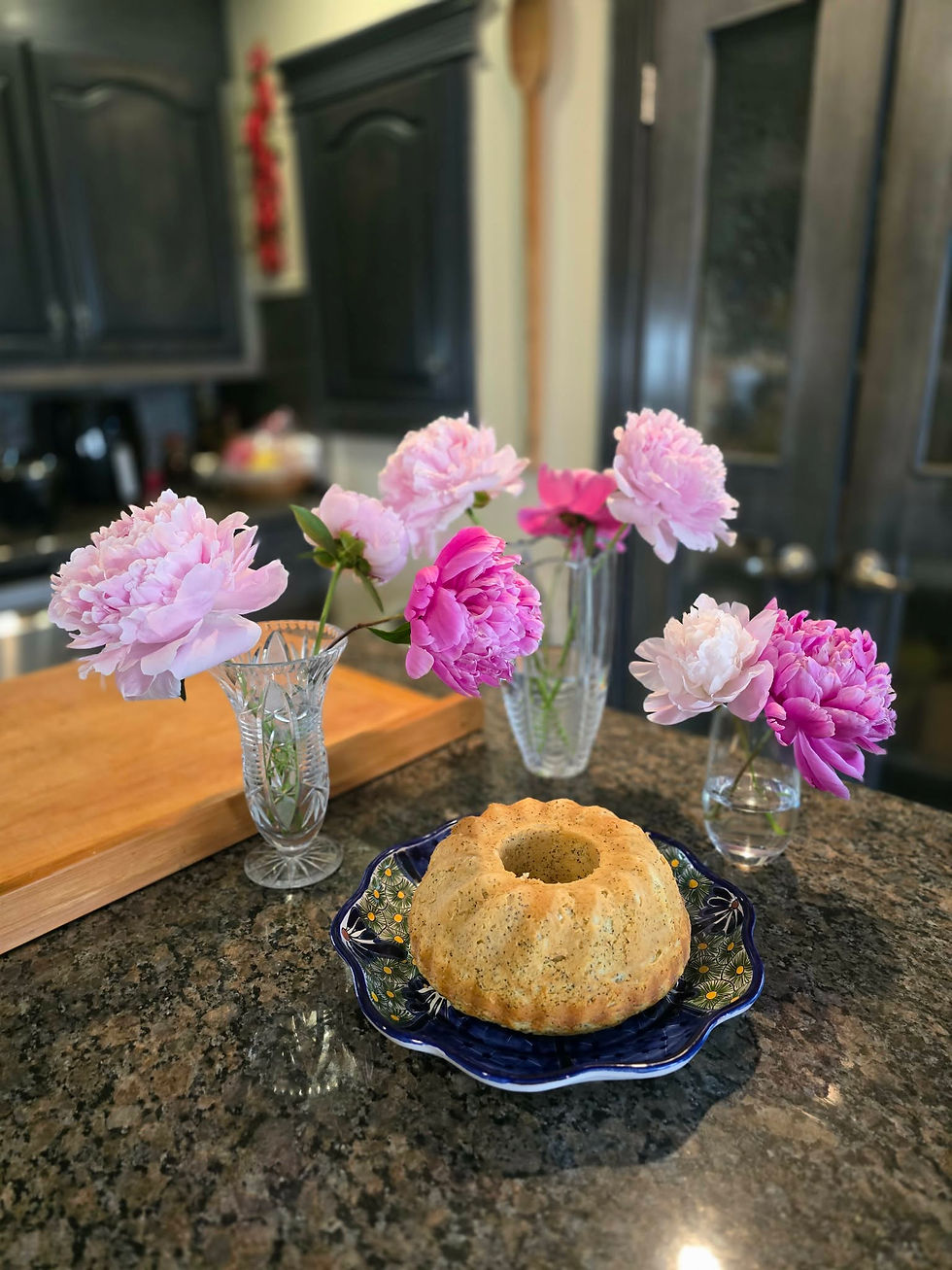
They'd probably spend it doing the simple things they loved—making wine, making sausage, baking something in the kitchen. Nothing extraordinary. Just having the privilege of being here, using their hands, making something and enjoying another evening at home.
Once you've watched people desperately want more time, it's difficult to treat your own time as something disposable.
So I try to use mine.
That doesn't mean every day has to be some enormous adventure. Sometimes "living" is gardening. Sometimes it's learning how to make stained glass. Sometimes it's taking a class, climbing a mountain, baking something, painting, travelling somewhere new or becoming absolutely obsessed with a hobby for six months.
I just don't want to spend my life waiting to start living it.
Travel itself has been incredible, but it's also strangely bittersweet. Sometimes I'll be standing somewhere beautiful on the other side of the world and instinctively want to call my parents and tell them every tiny detail—and then remember that I can't.
There is a particular loneliness in having an amazing experience and realizing the people you most want to tell about it aren't there anymore.
So I've started thinking about it differently.
I'm collecting stories.
Every country. Every mountain. Every ridiculous hobby. Every adventure I probably had no business signing myself up for.
They're stories I get to keep.
And I like to imagine that whenever I see my mom again, I'm going to have so much to tell her.
I'll tell her where I went, what I learned, who I met, what scared the hell out of me, what made me laugh, what I was terrible at and what I unexpectedly fell in love with.
Maybe that's one of the biggest ways grief changed me:
I stopped waiting for life to happen and started giving myself things to tell my parents about when I see them again.
9. I completely changed the way I think about my health.
After losing both of my parents—and my grandmother—to cancer, I couldn't help but examine my own lifestyle.
I stopped eating meat and smoked cheeses. I dramatically reduced how much alcohol I drink and regularly go long stretches without drinking at all—which, culturally, was a pretty big change for me.
One of my biggest inspirations has actually been my grandmother's brother in Germany. He's 85, vegan, travels the world and is in incredible physical shape. He can walk for hours and has maintained a level of mobility that many people much younger than him struggle with.
Seeing him made me realize how much our everyday habits can matter over decades.
It wasn't an overnight transformation. I went back and forth with vegetarianism for a long time.
But eventually it stuck, and I've now been without meat for years.
I can't control everything that happens to my body. None of us can. But losing my family made me want to take responsibility for the things I can control.
10. I stopped treating "someday" like a guarantee.
This might be the biggest change of all.
I don't automatically assume there will be another Christmas, another birthday, another vacation or another opportunity to tell somebody how I feel.
If I want to take the trip, I try to take it.
If I love someone, I tell them.
If somebody matters to me, I try to make time for them.
And if something isn't important anymore, I'm much more willing to let it go.
Losing my parents taught me something I wish I could have learned without losing them:
Time is not promised.
Death changed me.
It made me more sensitive. It made me more afraid of certain things. It left holes in my life that nothing will ever completely fill.
But it also made me more intentional.
I take care of myself because my mom didn't always get the chance to take care of herself.
I tell people I love them because I know there can be a last time.
I travel because I want stories to tell my parents someday.
I donate blood because maybe someone else gets a little more time with the person they love.
I built something that helps women because helping other people gave me a reason to keep moving when grief made standing still feel easier.
I don't think grief ever really leaves you.
Eventually, you just start deciding what you're going to build around it.
And these are some of the things I've built around mine.


Comments